12th house, 8th house & 4th house: Things that happen behind closed doors
Things that happen behind closed doors happen in the 12th house, the 4th house, and the 8th house. In this article these houses are viewed from a darker, creepy or frightening perspective, but this does not in any way encompass the complete nature of the houses. All of them have many positive components to them too. Let me know if you’d like to read a second article on the positive parts of these houses.
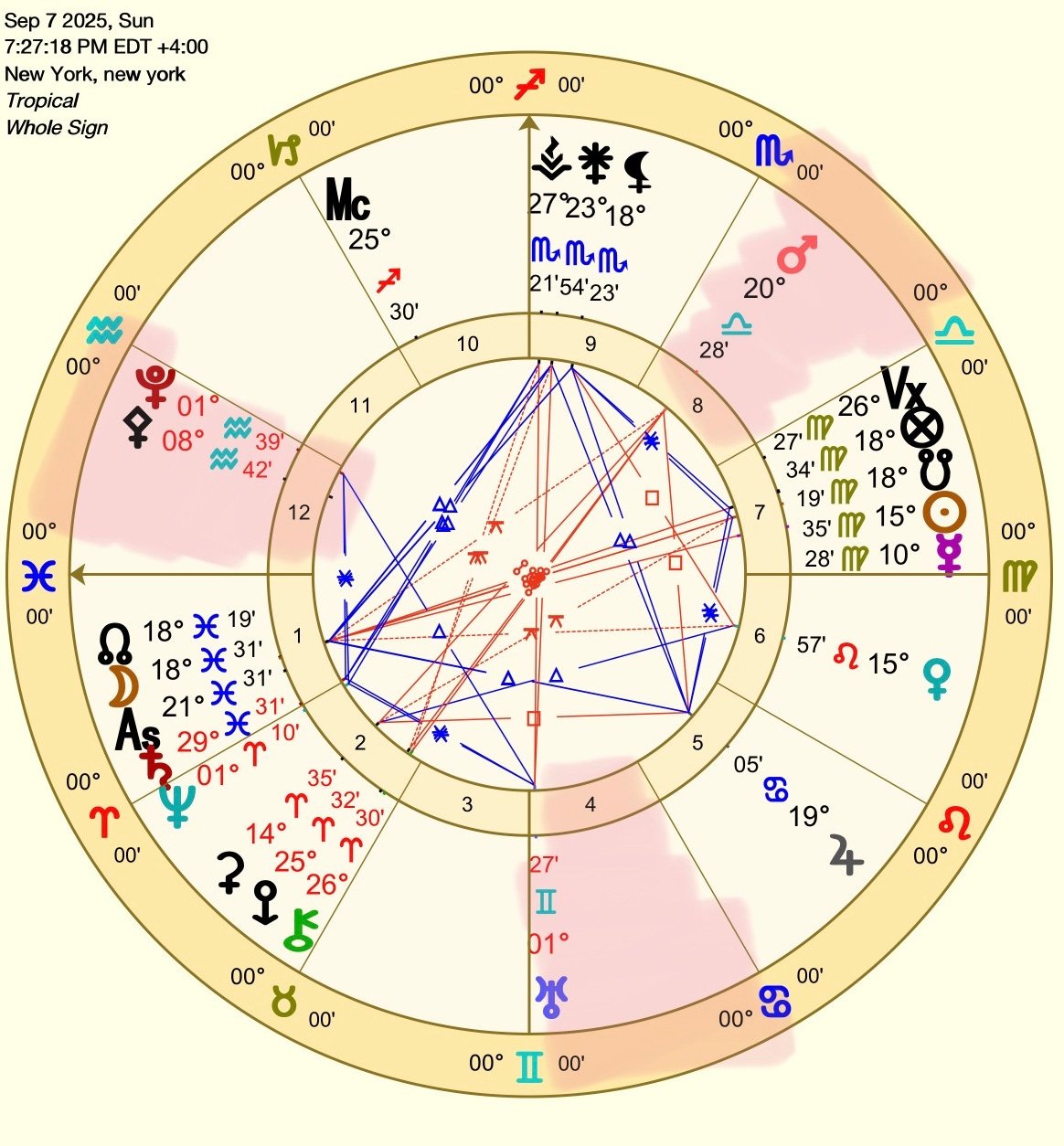
Chart with the 4th house, 8th house, and 12th house highlighted
The 12th house
The 12th house is associated with hospitals and prisons and encompasses the things, people, places and experiences we don’t want to experience or see, or aren’t even allowed to see, in some cases. We don’t want to go there. Lock ‘em up, get ‘em out of our sight. We don’t wanna touch that.
The 12th house’s association with hospitals is particularly interesting. Nobody wants to have to go to a hospital, but what is the purpose of going to a hospital? Is it to suffer and die? No, we go to the hospital to heal and hopefully be able to return to life good as new. Imagine if instead of prisons in their current form we created a system of rehabilitation that mirrored that of a hospital. I digress.
In short, the 12th house can be an uncomfortable place, though its beautiful side is incredibly tranquil.
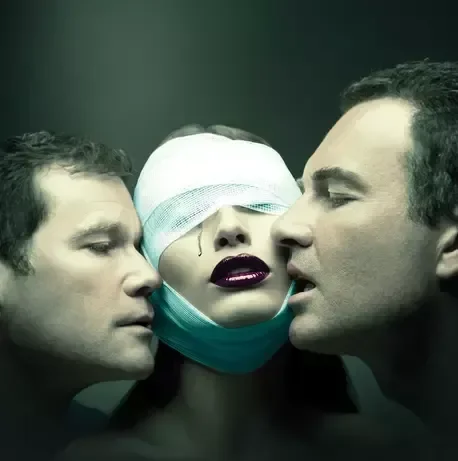
Nip/Tuck, FX
The show Nip/Tuck is a fantastic example of the 12th house. It’s a sort of psychological thriller-meets-medical drama (a medical setting is, of course, rather 12th house-y) with a good sprinkling of dark comedy. It is a dark, seedy, gritty series rife with myriad back-door, illegal, and generally fucked up goings-on. Secrets, mysteries, lies and legions of ‘underworld’ characters infest and move in and out of view throughout the series. It’s also about a plastic surgery center where people go for all kinds of reasons ranging from classic vanity to societal pressures to the much more bizarre and, often, fucked up. It’s like one big look inside an NDA; it epitomizes ‘things that happen behind closed doors’ in a medical setting.
Requiem for a Dream is extraordinarily 12th house too. It’s a dark and deeply disturbing portrayal of addiction, crime, isolation, and poverty — the exact kinds of experiences that society wants to hide from view, locked away in the 12th house. At the end of the film, none of the characters has escaped the world of the 12th house and we see them institutionalized, jailed, seriously maimed, or trapped in underworld crime. There is no happy ending; everyone is imprisoned in their own way. This speaks to the nature of the 12th house as the place where Saturn is in its joy (or at least the dark side of it!).
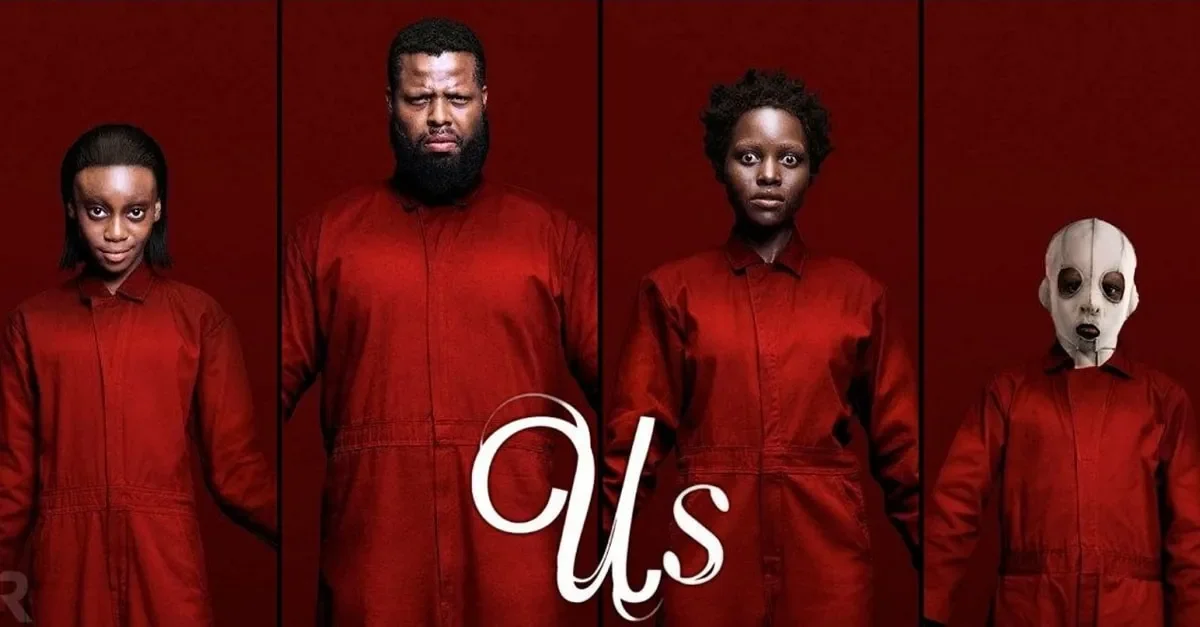
Us, wr. & dir. Jordan Peele, 2019
The movie Us also encapsulates the shadowiest parts of the 12th house too (one could also argue that it also fits seamlessly into the 7th and 4th houses). The rest of this paragraph includes big spoilers, so you’re better off watching the movie and coming back to this paragraph afterwards if you haven’t seen it (which you absolutely should). It begins with a young girl, Adelaide, who has a frightening encounter with her doppelgänger. After this experience, she shuts down and stops talking. As an adult, her family is attacked by masked strangers who are discovered to look exactly like them once they are unmasked. In the world of the film, we all have doppelgängers called The Tethered who live beneath us, relegated to tunnels and unable to speak, forced to mimic the movements and actions of their above-ground counterparts.
Us spoilers end here.
In an interview with Essence, director Jordan Peele discusses the symbolism of Us, saying, “This movie is about all that we tuck down into the recesses of our society and fail to acknowledge; all of those that suffer on the other side of the privileges we have. In many ways, as you know from Get Out, I feel that that applies to the prison industrial system. From where we get our sneakers, the person we pass on the street, the countries that we fail to support. There’s a lot to sift through, which is why it’s a fascinating topic for me.” He is describing, in essence (pun intended), the many dimensions of the 12th house.
The 4th house
The 4th house is the house of home, family, ancestry, lineage, childhood and other early life experiences. It represents, in short, an underground component of life — the roots or soil we grew from. The opposing house, the 10th house, is the house of public image, the most visible place in the chart. When interpreting the chart as a map of the sky, which is what it literally is, planets in the 10th house are more or less directly overhead, plainly visible. The 4h house, on the other hand, is the farthest place from the 10th, so it is arguably the most invisible place in the chart. When the sun is in the 4th house, for example, it is around midnight.
The 4th house is very private. In Hellenistic astrology it’s called the subterraneous place, or the underground place. It is the basement, a place where things can be buried, a cemetery where the ghosts of the past live. It’s even classically associated with death. Everything that happens behind the white picket fence happens in the 4th house — family secrets, raising children, generational shit, and so on. Even when a 4th house person is very famous, they typically enjoy some degree of privacy or are famous for their family, doing things related to family, investigating childhood stuff… in one way or another, there’s a 4th house connection.
The HBO miniseries Sharp Objects is probably the best example of the 4th house. This is another psychological thriller, wrapped up in a southern gothic mystery. It depicts a woman returning to her hometown as a journalist trying to investigate the mysterious murders of two girls. Investigating a crime against children and returning to one’s childhood home, where their family still lives? We’re in the 4th house already.
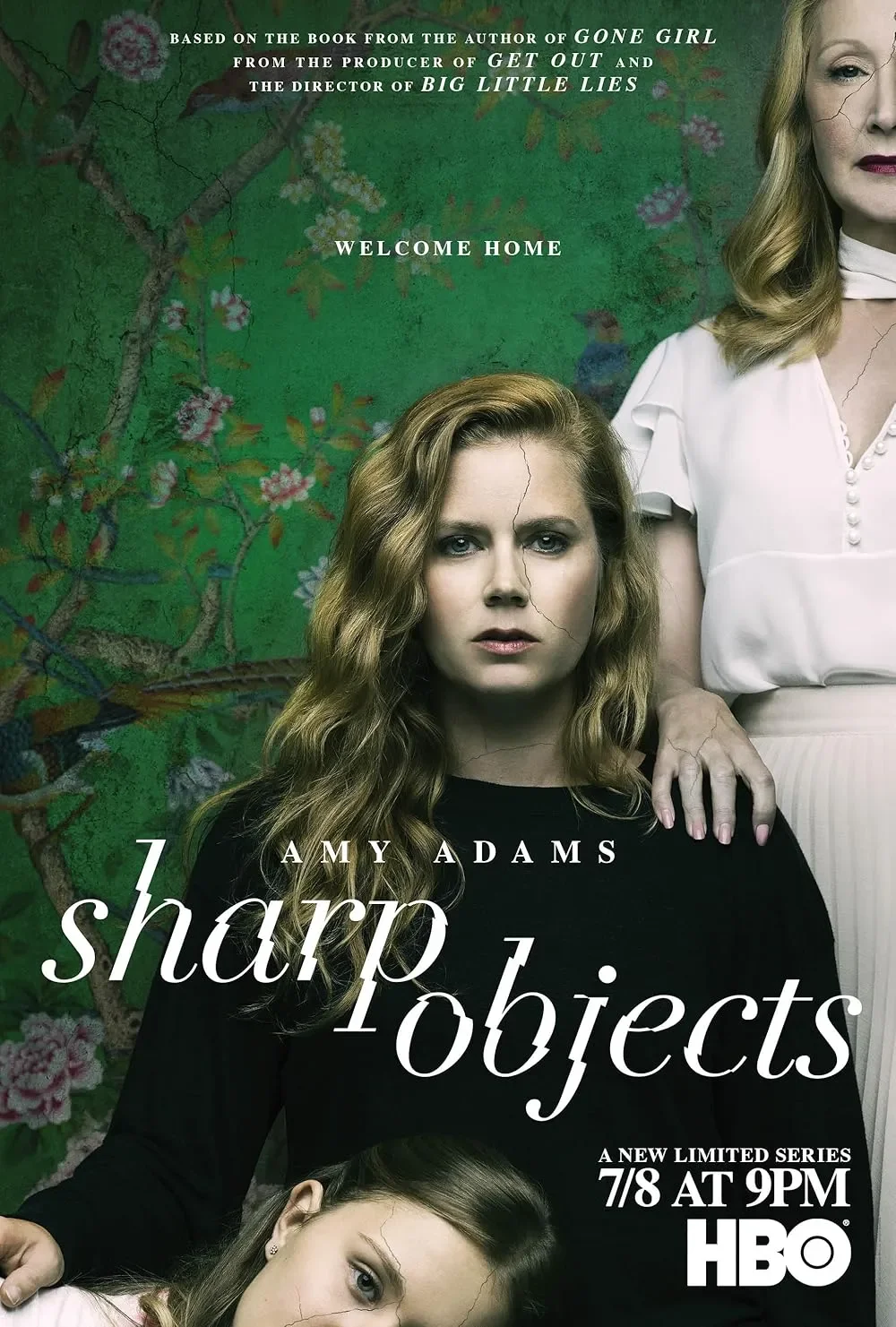
Sharp Objects, HBO
Sharp Objects is a look into hidden things going on between generations of a family, both tangibly and psychologically. This series is a psychological mindfuck — everything is hidden from view, numerous people in the film are not who they seem to the outside world (or to the viewer, in some cases), the mother is deeply concerned about her reputation and appearance, and to summarize the story in a few words, it’s about psychological problems passed down through multiple generations, secrets, and power dynamics within families. It feels very Pluto in the 4th house in particular.
On a superficially-lighter note, Keeping Up with the Kardashians is another prime example of 4th house media — literally a so-called “reality” show about a family’s life. Interestingly, matriarch Kris Jenner has her north node in her 4th house and her south node in the 10th house; she did a great job at combining the public south node with the much more private 4th house. Kim Kardashian is also a 4th house moon!
MTV Cribs is a fun example of the 4th house — a simple look into the opulent homes of celebrities that most of us would otherwise never get to see.
Hoarders fits in the 4th house too (though also the 2nd). Through Hoarders and others like it, the viewer gets a look into the reality of people who have filled their home with stuff, often to the detriment of their relationships, finances, the house itself, and even their health. What makes these shows especially 4th house-y is how they allow us to see something that is typically kept very much secret and behind closed doors; many people with hoarding disorder are incredibly private about their home and will go to great lengths to avoid allowing people into their home. The insight into the underlying psychology adds an interesting spice to the classic interpretations of the 4th house too, though these kinds of shows can be pretty exploitative at times.
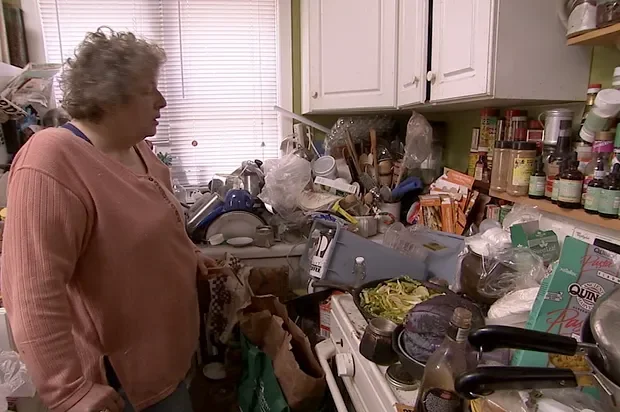
Hoarders, A&E
The 8th house
The 8th house is the least place-specific of these three houses. It’s the house of skeletons in your closet, hidden things, occultism (literally meaning hidden knowledge). It’s also associated with debts, taxes, inheritance, and I heavily associate hospice with the 8th house. It’s everything that we just don’t talk about, and things we want to avoid but can’t. To me, if the 8th house is a place, it’s the bathroom and the closet.
The 8th house follows the 7th house, right? So if the 7th house, the house of relationships (among other things), is where you get married, then the 8th house is everything that comes after the wedding — most importantly, the merging of assets and seeing the hidden parts of your spouse, the parts that not just anybody gets to see. It’s a house of secrets and psyche. We typically know about what’s going on in our 8th house (though we often don’t have a lot of control over it) but other people don’t know these things about us, until we let them in.
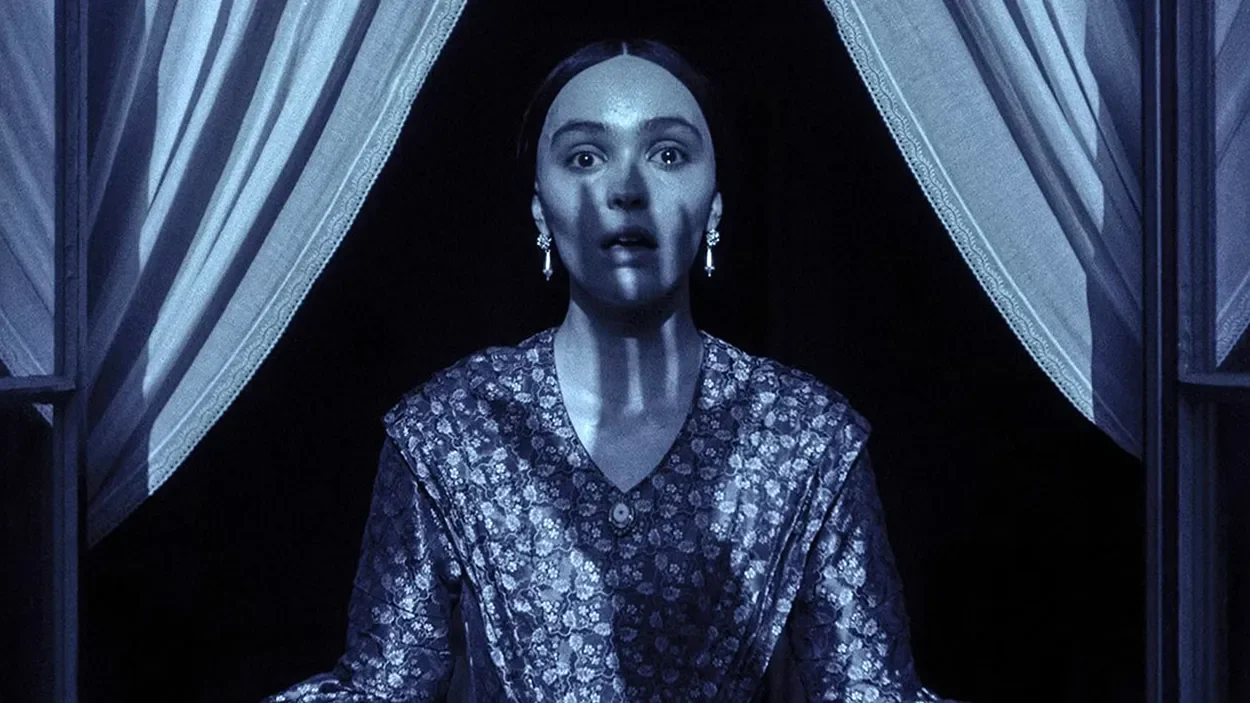
Nosferatu, dir. Robert Eggers, 2024
Nosferatu (2024) is an 8th house film in innumerable ways. The use of light and dark alone (see screenshot above) sets an 8th house tone. Viewing the chart as a map of the sky, the 8th house sits in the sliver of sky not far above the western horizon. When the sun is in the 8th house, it’s late afternoon when the sun is getting low in the sky, elongating all shadows.
In this adaptation of the film, there is a seemingly infinite number of themes and metaphors one could identify and almost all of them find their place in the 8th house. The film opens with a disembodied shadow of Orlok asking Ellen to swear “to be one with [him] ever-eternally” in a sort of warped 7th house marriage-like ritual in the middle of the night. A terrified Ellen agrees while in what seems to be some sort of trance. It may be interesting to interpret this as a symbolic of the way that women walk trance-like down that 7th house aisle to bind themselves to a man who has, to put it succinctly, done little but beat down her door with enough passion and craving. As a woman enters the bond of matrimony, she merges with — or becomes “one with” — another human being, sacrificing agency and control. These are all 8th house themes.
The movie develops to encompasses additional 8th house themes of occultism, trauma, mental illness, and intimacy. There’s some semblance of shadowy sexuality, which some associate with the 8th house as well. This shows up particularly in one scene where Ellen attempts to blot out the parts of herself that frighten her (and are possibly rooted in earlier sexual trauma) in a passionate fuck with her kind but bewildered real-world husband, Thomas. Even in marrying him she, like many who wed, had hoped that love would extinguish the inner darkness and all of her fears; she hoped that he would light the shadowy realm of her 8th house. Earlier in this scene Ellen even screams, “We should never have married! We are already dead!”
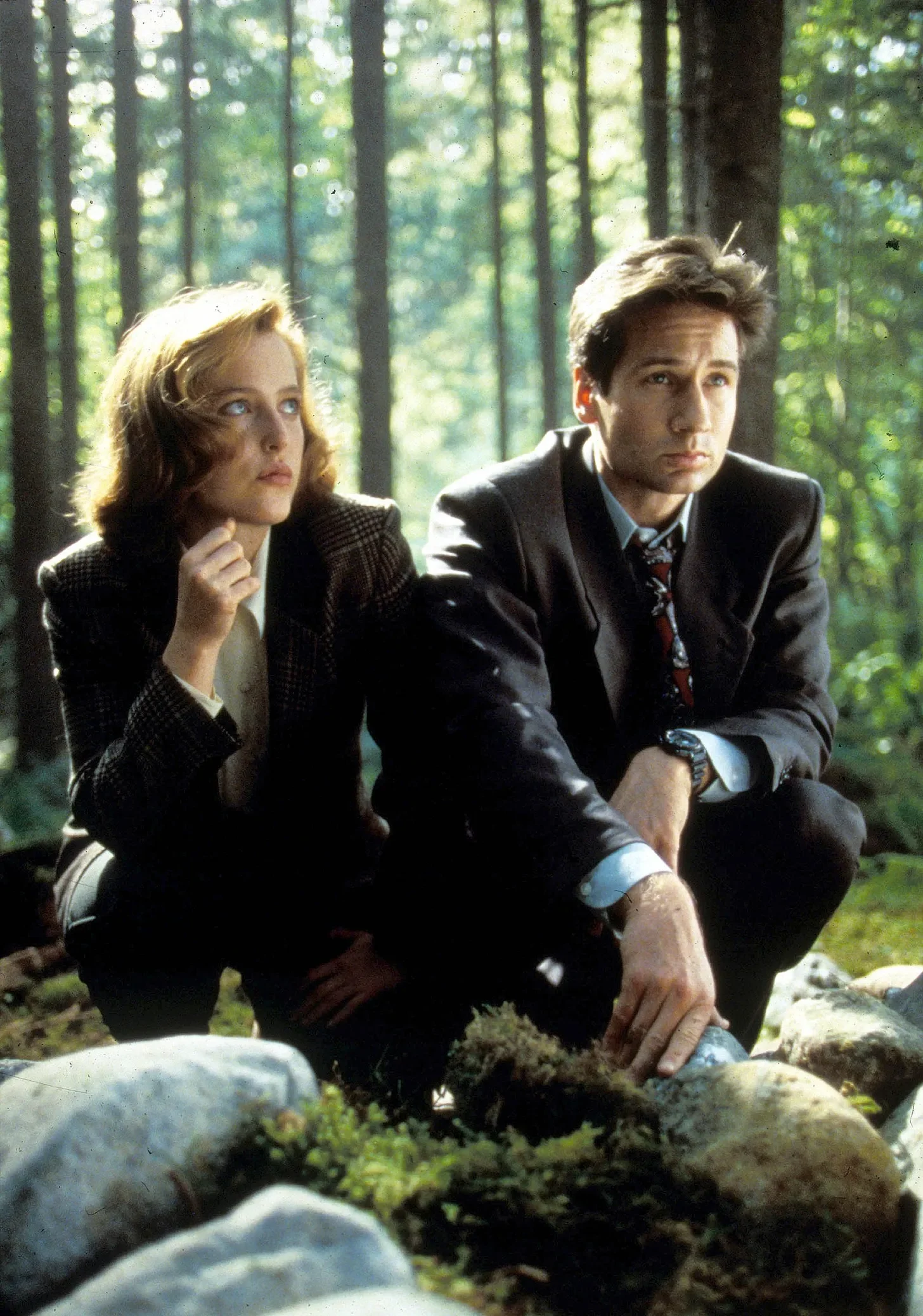
Series like The X-Files and Ghost Hunters are a lighter and quite obvious variety of 8th house show too. Literally investigating paranormal occurrences, conspiracies, and things hidden from the public eye in a manner that could be a little dangerous? There are few things more riveting to the average 8th houser. The show Who the (Bleep) Did I Marry? is 8th house as hell too. It tells the stories of people who married someone not knowing that they had committed some sort of crime and weren’t who they thought they were… even literally.